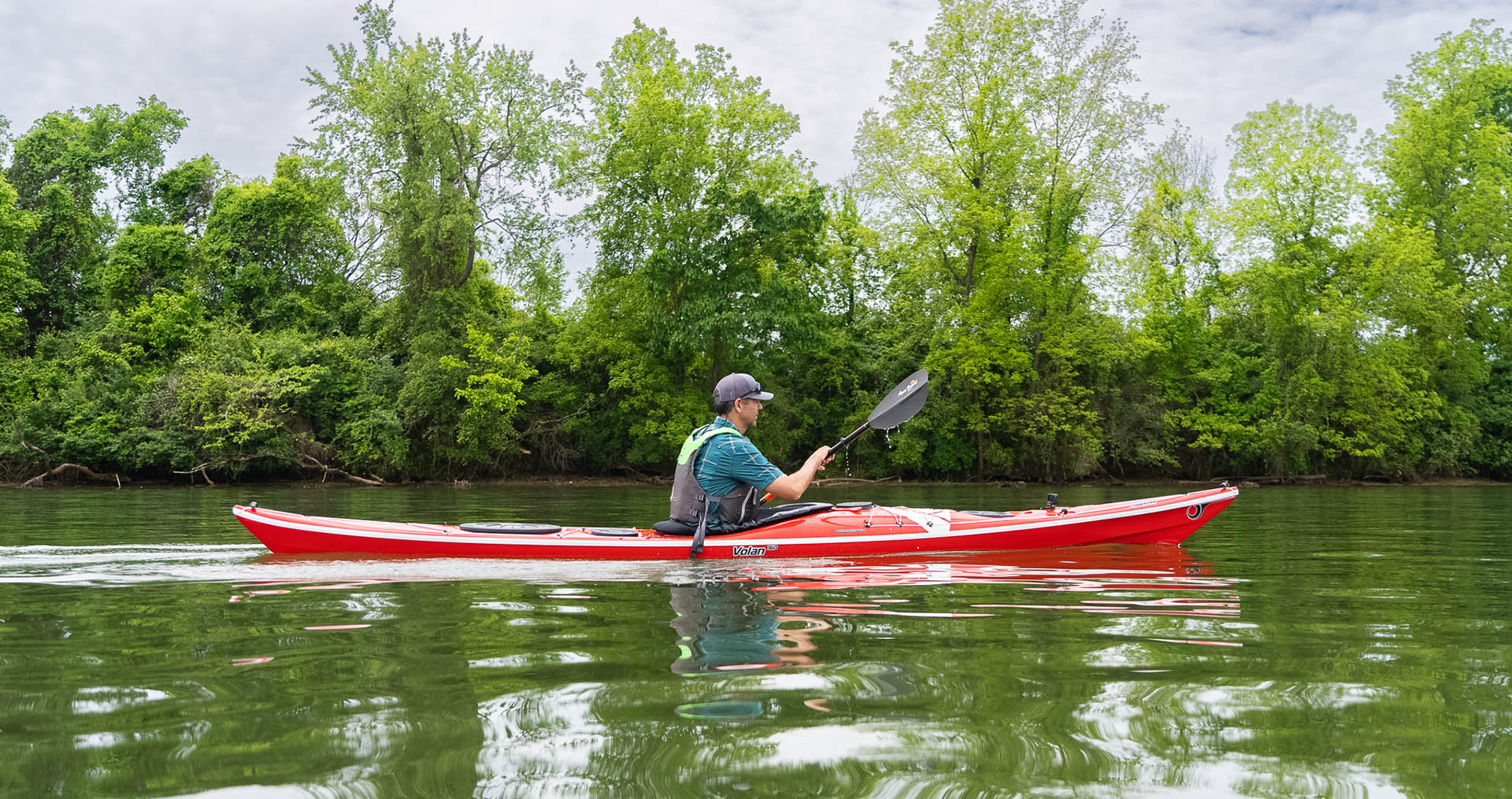
Ken Whiting with PaddleTV, and in this video we're talking about sea kayaks and touring kayaks. This is a big topic, and so we're going to cover a lot of ground, and so let's dive right in and talk about what makes a sea kayak a sea kayak, and how is a touring kayak different?
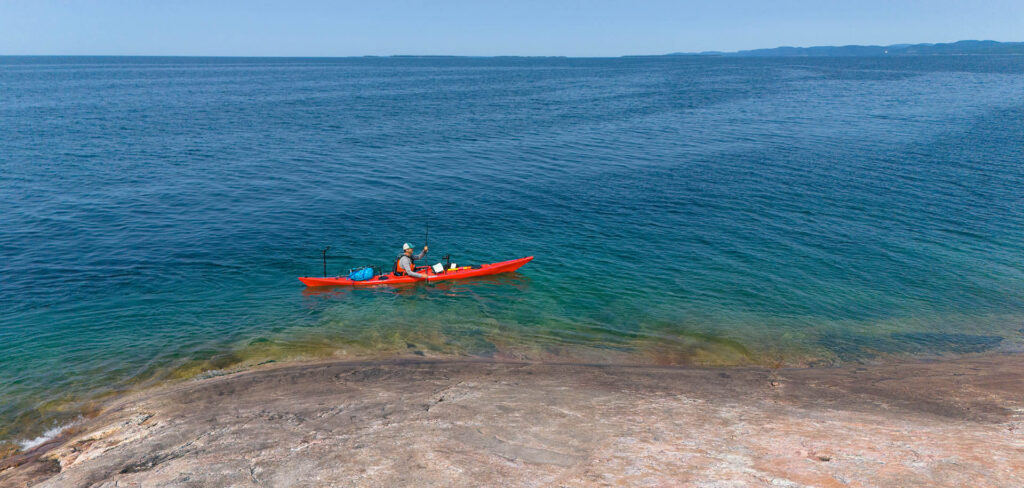
What Makes a Sea Kayak a Sea Kayak?
A sea kayak is a sit-inside kayak designed for efficient travel in variable conditions, with control and safety features that support exposed-water paddling and rescues
Here are the defining traits.
1) They're designed for efficient travel, which means they're longer and narrower than most other kayaks
Sea kayaks generally range from 15 to 19 feet long, and 21 – 24 inches wide.
2) They provide better tracking in open water.
Sea kayaks have a really defined V-hull shape at the bow and stern to help them cut a straight line through the water. The also commonly come with either a skeg or rudder to help them go straight in windy or wavy conditions, and we'll talk more about both of these in just a bit.
3) They're designed to be used with a Skirt or Spraydeck
Sea kayaks have smaller cockpits with a cockpit coaming designed to hold a skirt securely. A skirt let's paddlers deal with rough water and not have water get inside the kayak.
4) They have Rescue-friendly flotation: Specifically – bulkheads and hatches
Bulkheads are walls inside the kayak that divide the kayak into separate watertight compartments, which can be accessed through hatches on the deck. This provides a ton of internal storage, but also valuable flotation if you capsize and swim. We'll talk more about this in just a little bit as well.
5) They also have a cockpit built for control
More specifically, sea kayaks have smaller cockpits than sit inside recreational kayaks. This smaller cockpits allow for specialized outfitting like thigh hooks and hip pads, which give the paddler much better control and make rolling possible. You don't just sit in a sea kayak – you connect to them!
think it's is a bad name because it insinuates that they're only good for saltwater paddling.
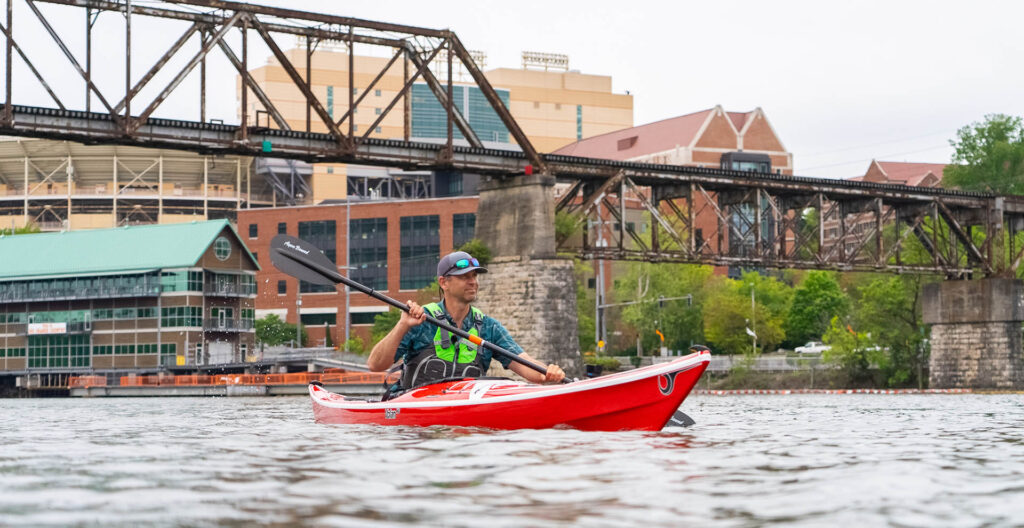
Sea Kayak vs Touring Kayak: What’s The Difference?
Depending on where in the world you live, for some people “sea kayak” and “touring kayak” are terms that are used interchangeably. They're the same things. But in many places, there is a difference between what people call sea kayaks and touring kayaks. The difference is that touring kayaks are a little shorter and wider than sea kayaks, and as a result, they're a little slower but more stable than sea kayaks. Otherwise, they share the same attributes, and can handle similar conditions, although they won't perform as well in those conditions.
To put some numbers to the question
- Touring kayaks are often: 12–15 feet long
- Sea kayaks are usually: 15–18 feet long
When it comes to Width
- Touring kayaks are roughly 24–28 inches
- Sea: roughly 21–24 inches
Is one better than the other?
Absolutely not. The best kayak is the one that’s best suited to your needs.
Are Sea Kayaks Only Made To Be Used In Saltwater?
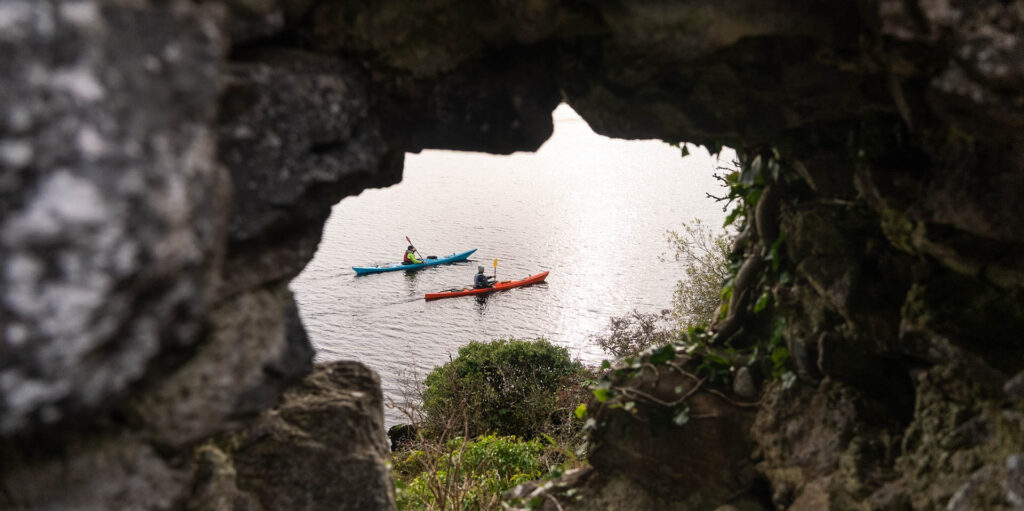
The name ‘sea kayak' causes a lot of confusion. The reason they're called sea kayaks, is because that's what they were originally designed for – to paddle in open saltwater conditions that are exposed to wind and waves, where covering long distances is often necessary. Now, they do an amazing job of that, but it doesn't mean that they're only good for that purpose. Sea kayaks can be ideal boats for freshwater lakes and rivers as well. That's why, even though I get why they're called ‘Sea kayaks', I think it's is a bad name because it insinuates that they're only good for saltwater paddling.
Are Sea And Touring Kayaks Only For Advanced Paddlers?
Contrary to what many people think, sea kayaks and touring kayaks are not only for advanced paddlers—beginners can use them too, as long as they understand the tradeoff.
Sea and touring kayaks put a higher priority on speed and efficiency than most other kayaks. That means they’ll feel a little less stable at first, and yes—there’s a higher chance of capsizing.
But that doesn’t make them “expert-only.”
In fact, many sea and touring kayaks offer a good balance of speed and stability, and can be very appropriate for beginner paddlers—who want a boat that's fast and fun, and that they won’t outgrow, and if they aren't thrown off by the higher chance of capsizing.
What beginners need to do differently
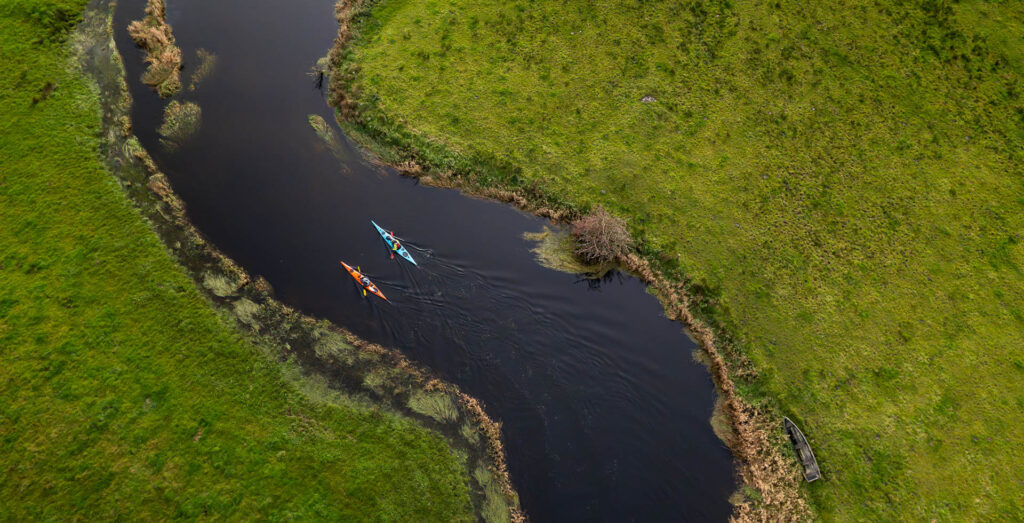
The big issue for beginners using sea or touring kayaks isn't whether it's ok to do so, but where it's ok to do so. More specifically, beginners need to stay in water that's sheltered from wind and waves, and they need to stay close to shore, so that if they do capsize and swim, they're close enough to comfortably swim to shore and regroup.
To paddle a sea/touring kayak (or any kayak for that matter) safely outside of sheltered water and further from shore than you can swim, you need to be able to re-enter your kayak from the water. While it's not overly challenging to learn how to do this, it does take instruction and practice.
Bottom line: beginners can absolutely use touring and sea kayaks and enjoy the speed they provide—just match the water you take them on to your skills.
Impact of Hull Design on Sea Kayaks or Touring Kayaks
Hull design has a major impact on any kayaks performance and stability. We could get into a lot of detail, but to keep things simple, hulls can be designed to do 3 things.
- Track or turn
- How it handles waves
- How stable the kayak feels (primary and secondary stability)
In very simple terms, the rocker of the kayak – which is how much banana shape it has when you look at it from the side, dictates how well it tracks or turns, or handles waves. The more rocker it has, the better it will turn and deal with waves. The less rocker it has, the better the kayak will track or go straight.
The cross sectional shape has the biggest impact on the kayaks stability. The flatter the bottom of the kayak is, the more primary stability it will have (the stability you feel when sitting flat on the water). The more rounded or angular the bottom is, the easier it will roll onto its edge and the more secondary stability it will have (the stability you feel when edging your kayak). This is a great feature for advanced paddling, because putting a sea kayak on edge helps to carve turns and deal with current and waves.
Most sea and touring kayaks are designed to provide a good balance of all these things, but all naturally prioritize one characteristic over the other. I'm not going to get into the weeds anymore about hull design in this video, but I did release a video a while back that talks about hull design in a lot more depth.
Skeg vs Rudder: What’s The Difference And Why It matters
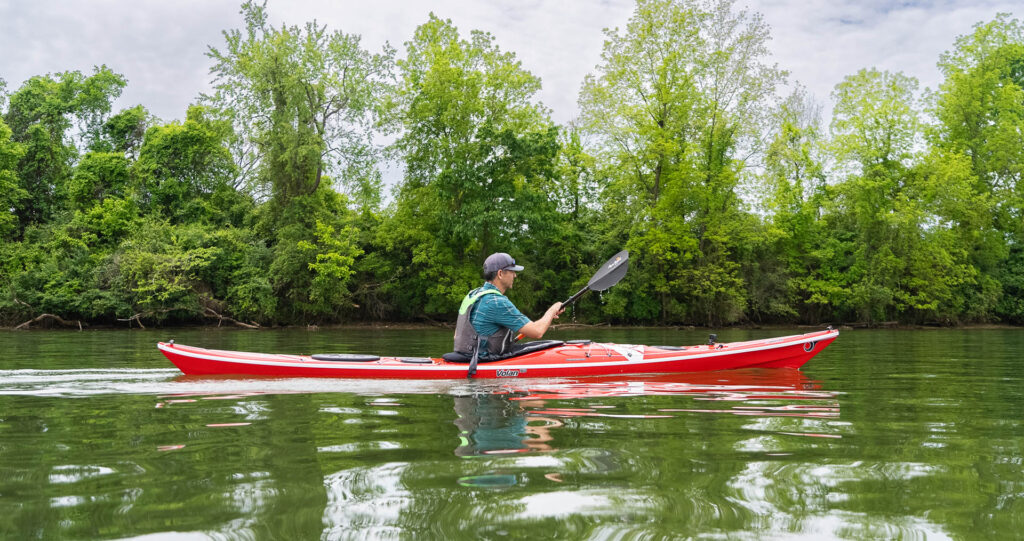
A rudder and a skeg both help control the kayak in wind by reducing weathercocking (that annoying tendency a kayak has to turn into the wind).
Rudder: A rudder is mounted at the stern, drops into the water, and turns using foot pedals, helping you steer and manage wind.
Skeg: A skeg drops down from the hull and doesn’t turn; you deploy it to different depths to improve tracking.
There's no right or wrong here – it's personal preference.
What I like about rudders, is that you can actually steer the kayak, and rudders don't take up any of your storage space inside the kayak, because they're mounted on the outside. What I don't like about rudders is that you control them with your feet, because that gets tiring over a long day, and I like having a simple solid foot peg to push on. Rudders are also a pain when you're carrying and loading kayaks on your vehicle.
What I like about skegs is that they're simple and don't need to be controlled with your feet. You drop them, and forget them. What I don't like about skegs, is that they take up space in the stern compartment of the kayak, which makes packing a little trickier for multi-day trips. I also don't like how skegs can jam in the skeg box if you get little rocks or pebbles in there.
Spray Skirts for Sea Kayaks
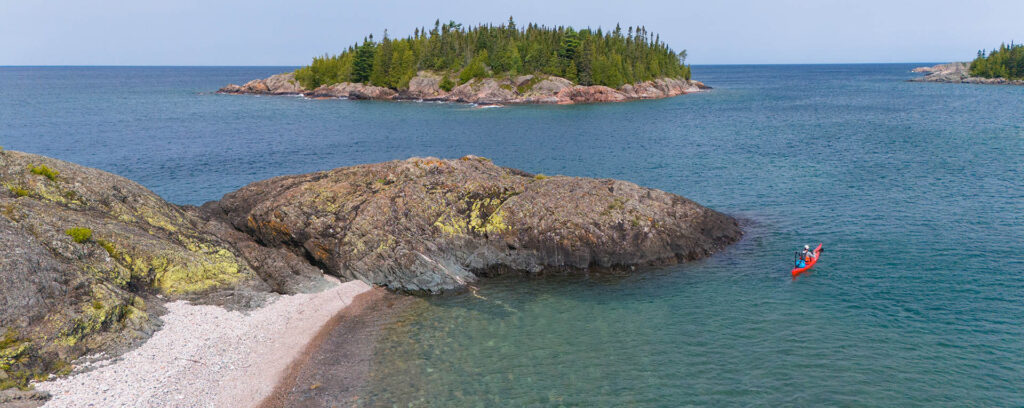
If you're sticking to calm, protected water, you don't need to wear a skirt while paddling a sea or touring kayak, but it quickly becomes essential when you're in exposed water, because it prevents your cockpit from getting swamped.
If you're going to use a skirt, take the time to practice a few wet exits in a calm and controlled environment so that you're not learning the hard way when you flip for the first time. Also, make sure you put your skirt on with the grab loop exposed.
Bulkheads and hatches: storage, flotation, and easier rescues
Bulkheads divide the kayak into watertight compartments and provide flotation; hatches give you access for storage. This design helps in a capsize because the boat is less likely to become a half-sunk, waterlogged nightmare.
Sea/touring kayaks commonly have two main hatches (bow and stern), and many include a day hatch behind the cockpit for access while seated. Some boats also include a smaller “mini hatch” near the cockpit for quick-access items.
Common Mistake: Assuming hatch storage is always dry. It’s often dry-ish, but you still pack critical items in dry bags—especially on exposed water.
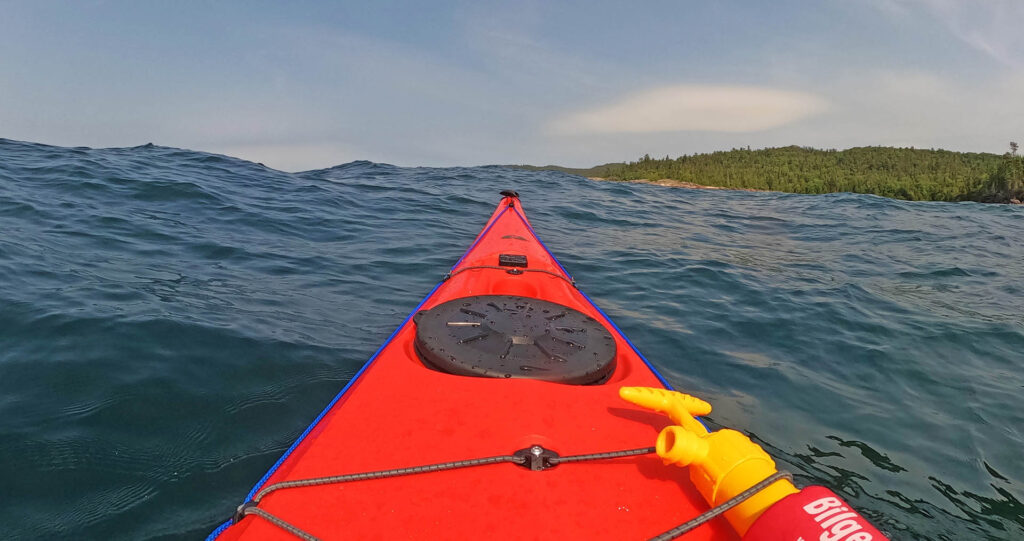
Deck Features: perimeter lines, bungees
Perimeter deck lines and bungees are standard on many sea/touring kayaks and serve real functions for safety and gear management.
Perimeter lines don't stretch. They're good for grabbing onto and anchoring things to.
Bungees are stretchy lines doesn't to hold gear in place, like drybags, extra paddle, etc.
In general, the less gear you carry on deck, the better. It keeps your center of gravity lower, reduces clutter for rescues, and makes rolling easier.
Deck height tradeoff: storage vs wind vs rolling
A higher deck can mean more internal volume (great for multi-day trips), but it can also: Catch more wind (especially side wind), and make some rolls harder if the rear deck is high.
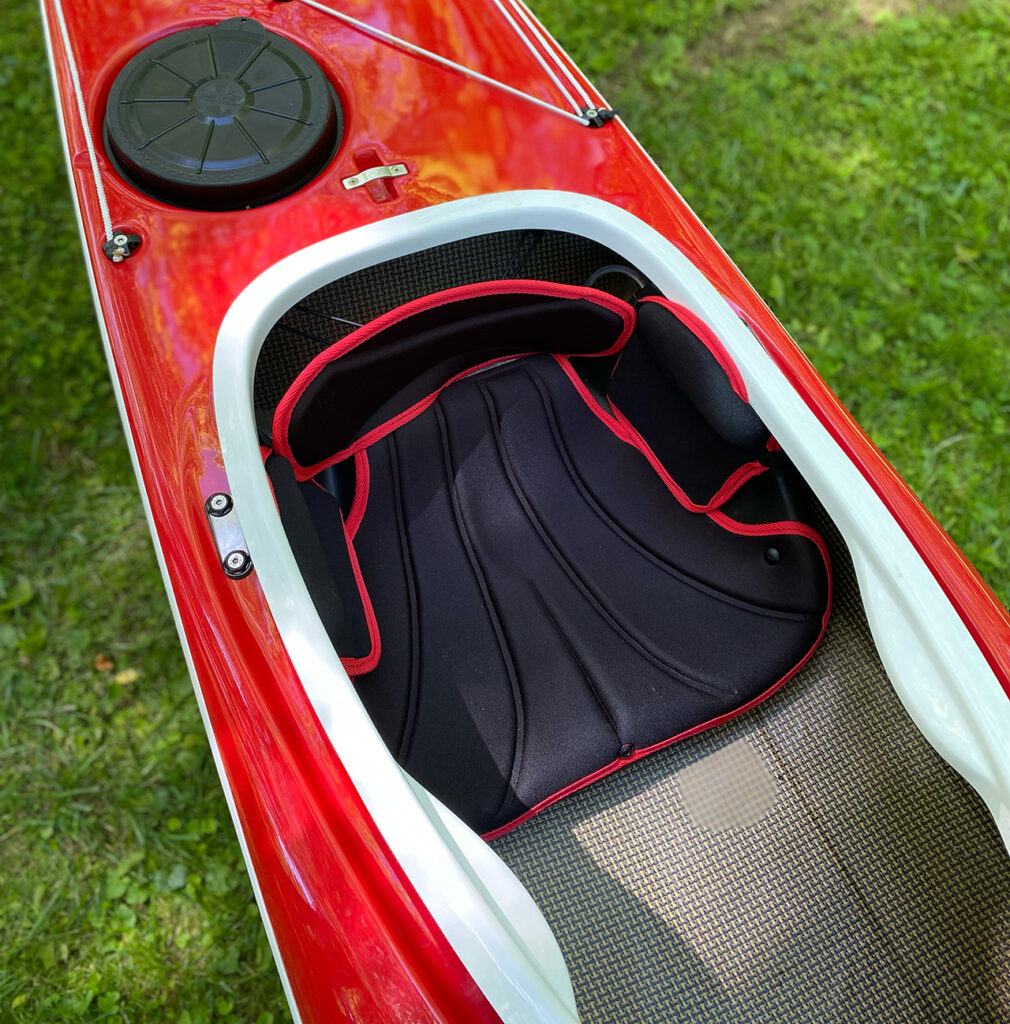
Outfitting: comfort and control
Better outfitting usually shows up as you spend more, and it results in more control and comfort. Enhanced outfitting can include:
- More comfortable seats offer better padding and under leg support
- Better backbands. Low profile back bands are for higher performance paddling, because they support, without restricting movement. Higher profile back bands are for calmer conditions, because they provide added support, but at the cost of some freedom of movement.
- Better hip padding is contoured and customizable
- Better thigh hooks offer more control (especially for edging, bracing, rolling)
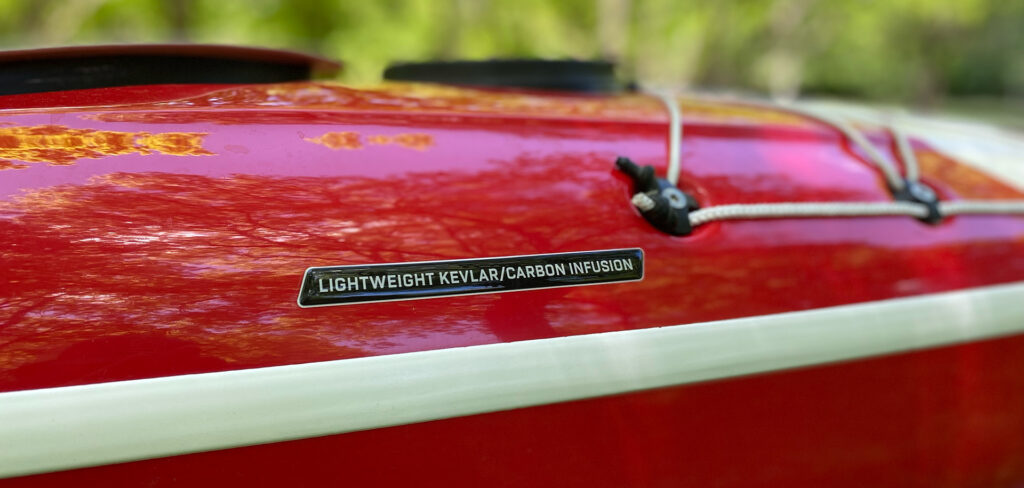
Materials: plastic vs thermoformed vs composite
Your kayak’s material affects weight, performance, durability, and cost.
- Rotomolded plastic: most durable, but the heaviest
- Thermoformed plastic: about 20% lighter than rotomolded, stiffer (better performance), but not nearly as durable.
- Composite (fiberglass/carbon/kevlar, etc.): typically lighter and very stiff/smooth (beautiful glide), but costs the most and durability depends on layup. There are also composite kayaks made with more sustainable materials like flax/cork.
How much do Sea kayaks Cost?
While features will impact the cost of a sea kayak, the materials used to make the kayaks have the biggest impact on price. Rotomolded plastic kayaks are the cheapest, and regularly sell for around $2000 – $2500 USD. Thermoformed plastic kayaks are generally 20% lighter, but 20% more expensive than rotomolded ones. Composite kayaks are the most expensive, and can vary greatly in price depending on the specific materials that are used, and the amount of those materials (thickness of the layup). Composite kayaks range from $4000 – $7000 USD.
Pro Tip: If you’re choosing between “lighter” and “tougher,” be honest about where you paddle. Rocky shorelines and shallow launches can punish super lightweight boats if you’re not careful.
How to choose the right sea/touring kayak
The right sea/touring kayak is the one that matches your water, your trip goals, and your comfort with skill development. Decide what's most important:
- Speed vs stability
- Storage capacity for multi-day trips
- Rollability of the kayak
- Rough water handling vs tracking
Choose a touring kayak if…
- You want efficiency but prefer more stability margin
- You want a versatile boat for calm water with occasional rougher days
- You don't need extra large storage capacity for long multi-day trips.
Choose a sea kayak if…
- You regularly paddle more exposed water
- You want maximum glide and efficiency
- You're willing to give up a bit more stability for performance
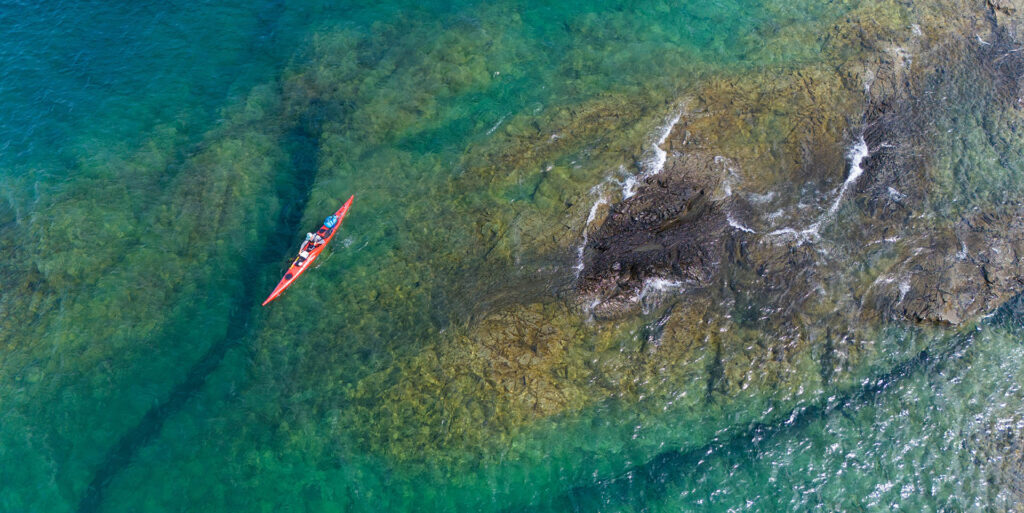
Conclusion: a sea kayak doesn’t make you safer—features and skills do
Sea kayaks and touring kayaks open the door to longer days, bigger water, and real adventure. But they’re not magic, and so keep your priorities straight:
- Wear a properly fitted PFD
- Check weather and water conditions
- Be conservative in cold water—immersion risk is real
- Learn the skills that match the water you want to paddle (wet exits, re-entries, assisted rescues)
Want the best next watch on PaddleTV? Start here:
- Skeg vs Rudder: https://www.youtube.com/@PaddleTV/search?query=skeg%20vs%20rudder
- Spray Skirt basics: https://www.youtube.com/@PaddleTV/search?query=spray%20skirt
- Touring kayak buying and reviews: https://www.youtube.com/@PaddleTV/search?query=touring%20kayak
FAQ: Sea Kayaks and Touring Kayaks
Are sea kayaks and touring kayaks only for advanced paddlers?
No. Many touring kayaks offer a great balance of speed and stability, and can work well for beginners who accept a higher chance of capsizing and paddle conservatively while learning.
What is the main purpose of a sea kayak?
A sea kayak is designed for efficient travel in variable conditions, with features like a smaller cockpit, bulkheads/hatches, and wind-control systems.
Are sea kayaks only for the ocean?
No. Despite the name, they’re touring boats and can be used on big lakes and other open water.
What’s the main difference between a skeg and a rudder?
A skeg drops down and doesn’t turn; it improves tracking. A rudder turns and can help steer, while also helping with tracking in wind.
Why do sea kayaks have bulkheads and hatches?
Bulkheads create watertight compartments for flotation and storage access through hatches, helping the kayak stay manageable after a capsize.
Do I need a spray skirt?
In calm protected water, you might not. But in water that can become rough, a spray deck helps prevent swamping and preserves the option to roll after a capsize.
Author, Ken Whiting, is the Host of the Facing Waves TV series, @PaddleTV YouTube channel, @KenWhitingAdventures YouTube channel, @GoPaddle Facebook page and @Paddle365 Instagram page. www.kenwhiting.ca