If you've spent any time researching portable touring kayaks, chances are you've come across the TRAK. And chances are you've also got questions about it — because it's a big purchase, and there's honestly nothing else quite like it on the market.
I've been paddling TRAK kayaks for over 20 years now, in everything from calm touring conditions to serious rough water. I've taken them around the world, I've broken one, and I've repaired one. So I want to walk through the questions I hear most often, and give you honest answers based on two decades of actually using this boat.
1. Why Is the TRAK So Expensive?
The TRAK currently sells for $4,250 USD, which sounds steep until you compare it to the right category of kayak.
Plastic sea kayaks — rotomolded or thermoformed — typically run $2,000 to $3,000 USD. But the TRAK isn't really in that category. It belongs with composite sea kayaks, built from materials like fiberglass, carbon, or kevlar. Fiberglass sea kayaks usually cost $3,000 to $4,500, and carbon or kevlar models run $4,000 to $7,000. At $4,250, the TRAK sits right in the middle of that composite price range.
So what do you get for that price? A 16-foot sea kayak that folds down into a rolling travel bag — one you can throw in your trunk, store in a closet, or fly with. And you get something no other kayak offers: adjustable rocker. Using hydraulic jacks, you can flatten the hull for speed and tracking, or add rocker for maneuverability in rough water.
I don't personally need a portable kayak most of the time, as storage and transport aren't issues for me. But I put a tremendous value on being able to travel with a high-performance 16-foot sea kayak, and I really value being able to tune the rocker to match conditions.
2. How Durable Is The TRAK Kayak?
Let's be honest: a skin-on-frame folding kayak is never going to be as bomb-proof as a rotomolded plastic kayak.
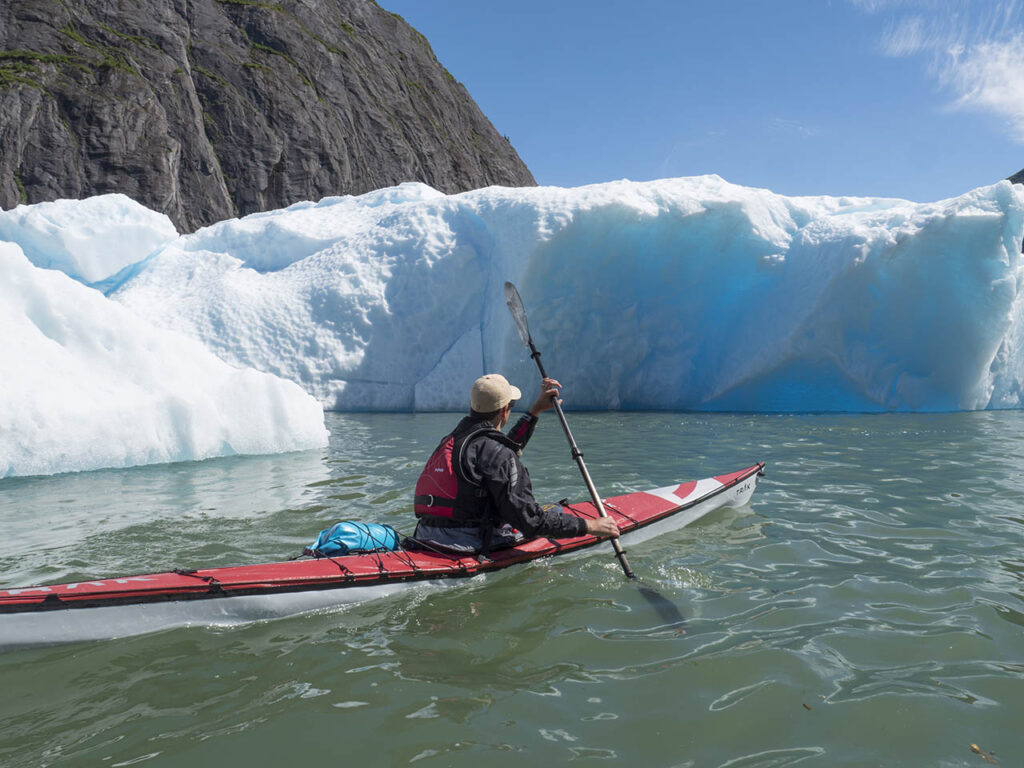
But “not as tough as plastic” doesn't mean fragile. I've run the TRAK through heavy surf, big whitewater, jagged ice, and shallow rocky rivers. I've also hauled them through airports more times than I can count, which is honestly where they take the most abuse. The skin and frame have held up impressively well under regular use.
I have broken one — I snapped a jack running a waterfall when a rock hit it dead on. In fairness, that kayak was a very early test unit that TRAK sent me specifically to see how far I could push it, and it took a waterfall to do it. I've also put a small hole in a skin by driving onto an oyster bed while surfing a wave. Anyone who's dealt with oysters or barnacles knows how sharp they are.
The good news: a small puncture isn't a big deal. Type A repair tape works for a quick fix, and a permanent patch is about as easy as patching an inflatable kayak.
TRAK also backs the boat with a 7-year warranty, which is longer than any other warranty I've seen in the kayak world — a good sign of how confident they are in the build quality. But durability here means “handles regular use very well,” not “handles abuse.” Don't drag it across parking lots, don't run it over sharp rocks or barnacles, and please don't run waterfalls with it. If you want a kayak you can do absolutely anything to without a second thought, get a rotomolded plastic boat instead.

3. Does the TRAK Actually Perform Well in Rough Conditions?
This is the question that matters most, because adjustable rocker and portability don't mean much if the boat can't handle real conditions.
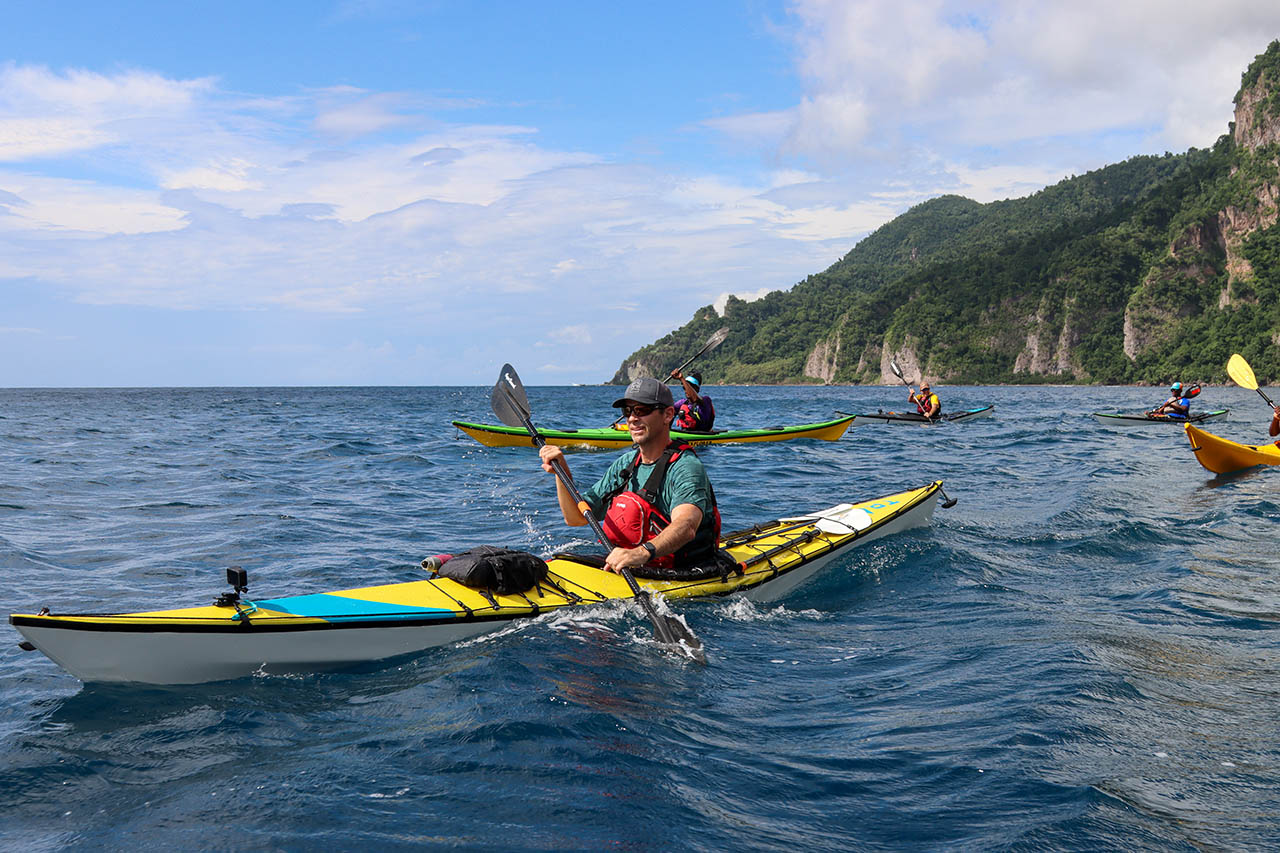
The answer is yes — the TRAK performs comparably to a hardshell kayak and is genuinely safe for rough-water paddling. I've tested it in big whitewater, large ocean surf, and nasty storm conditions, and this is one of the biggest things that separates the TRAK from every other portable kayak out there.
Most portable kayaks fall short in rough water because either the hull design or the outfitting gets compromised to make the boat packable. That's not the case here. The soft hull feels a little different than a hardshell under you, but the performance characteristics carry over, and the outfitting — while a bit more basic — still gives you solid contact and boat control.
And then there's the rocker adjustment again, which is a genuine game changer. It lets the TRAK outperform many hardshell sea kayaks in conditions those boats aren't optimized for.
A couple of things to keep in mind if you're taking a TRAK into rough water:
- Flotation matters. Anytime you're paddling beyond a comfortable swim to shore, you need flotation in the boat — which is why two flotation bags come standard. A sea sock, sold as an accessory, is worth considering too.
- Upgrade the outfitting. If rough water is in your plans, get the aggressive thigh hooks for better edging and rolling control, and the hip pads for better contact.
4. Does the TRAK Kayak Have Any Storage?
This is probably the biggest misconception about the TRAK. Because it doesn't have the hard hatches you see on typical sea kayaks, people assume there's no storage. Not true — it just works differently.
The TRAK comes with two large gear flotation bags, one for the bow and one for the stern. These are dry bags that double as flotation. You pack your gear in, seal them, slide them into the ends of the boat, then top off the air with the blow valve. It keeps your gear dry and gives you flotation if you end up swimming.
Is it as convenient as popping open a hatch? No. You have to be smarter about packing — put what you need first at the top, since anything buried deep means pulling the whole bag out.
Bottom line: there's enough storage for multi-day trips if you pack smart, but if you're planning a long expedition with a ton of gear, a full-size expedition sea kayak with big hatches is going to serve you better.
5. Who Should Actually Buy a TRAK?
The TRAK isn't the right kayak for everyone — but for the right person, it might be the best kayak they'll ever own.
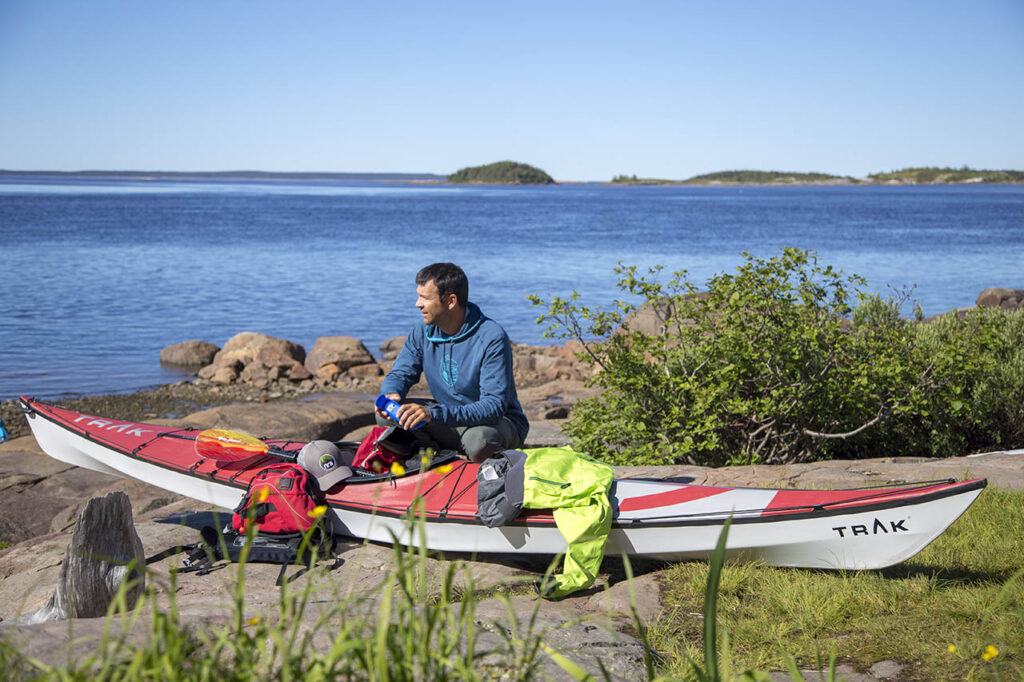
It's for someone who wants a high-performance sea kayak and values portability, whether that's because you live in an apartment, drive a small vehicle, or just love the idea of bringing a legitimate sea kayak anywhere in the world.
It's also for someone who wants one kayak that does a lot of things well. No kayak does everything perfectly, but the adjustable rocker gets the TRAK closer than anything else I've paddled — flat and fast for touring, or rockered up for surf, current, and rock gardens. That makes it a kayak you literally can't outgrow. A lot of paddlers buy a boat that fits where they are today, then start paddling farther and rougher and wishing they had something more capable. The TRAK grows with you.
Is it a good beginner kayak? Yes and no. At 22.5 inches wide, it's not going to feel as stable as a wider recreational kayak, so if you're a nervous beginner, this probably isn't your first boat. But for an adventurous beginner — someone who knows they want to build real skills, take lessons, learn rescues, and eventually paddle beyond flatwater — the TRAK makes a lot of sense. Just know you're buying a kayak you'll grow into, not one that feels rock-solid on day one.
It's also for paddlers who want to feel genuinely connected to their boat for edging, bracing, rolling, or wearing a spray skirt. You're not sitting in the TRAK like a passenger; you're controlling it like a real sea kayak.
One more thing worth mentioning: TRAK is a small company built around this one very unique kayak, and that has real advantages. You're buying into a family, not a faceless brand — which means support, replacement parts, and a warranty far longer than the industry norm. That matters if you're thinking about this as a long-term investment.
BONUS QUESTION: Is The TRAK Kayak Hard to Set Up?
This is another very common question. The simple answer is, No. it's not ‘hard' to set up, but it does take me about 15 minutes to set up at a leisurely pace. To show you what's involved with setting up a TRAK kayak, I did a video that shows the whole set up process from start to finish, in real time.
Learn more about who should buy a TRAK Kayak.
About Ken Whiting
Author, Ken Whiting, is the Host of the Facing Waves TV series, @PaddleTV YouTube channel, @KenWhitingAdventures YouTube channel, @GoPaddle Facebook page and @Paddle365 Instagram page. www.kenwhiting.ca